Chinese Genealogy
�Z�Z���Z�Z天涯�Z�Z�Z�Z�Z�Z�Z�Z�Z�Z�Z�Z�Z�Z�縷絡Z
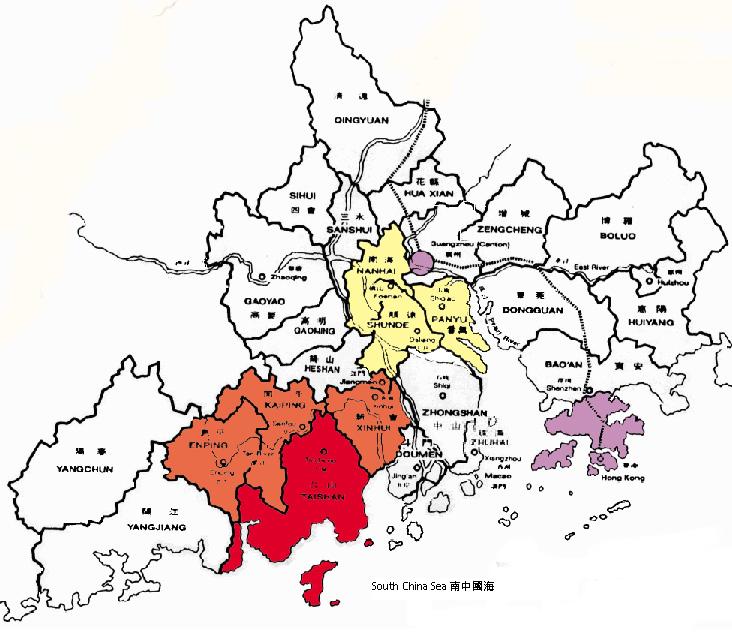 This site is devoted to the genealogy of Chinese families from an area of Guangdong, China (中��Z�Z廡Z�Z�Z)commonly known as Siyi (�Z�Z�Z�Z�Z�Z) or four counties. The counties are Xinhui (�Z�Z���Z�Z), Taishan (�Z�Z�山), Kaiping (�Z�Z�Z幡Z), and Enping (�Z�Z�平). The families in this area have much in common besides geographic location. The great majority trace their origin to China's central plain. Each faamily may have different reasons for leaving the Central Plains and migrated southward. The most common would be fleding the turmoil caused by an invading nomad tribe, internal uprising or natural disaster. This southward journey happened in multiple stages and over hundreds of years. Each major unrest or disaster drove them further south until they finally settled in their current locations. In many cases this final settlement took place five to six hundred years ago.
Due to crowded living condition and lack of agrarian land the migration, however, continued. At first a small number headed to the South Pacific. Since the 1850's an increasing large number had crossed the Pacific and Indian Oceans in search of work. This is not a true migration in that they seldom settled in their new locations due to cultural and political reasons. This, however, began to change in the latter half of the 20th century as the Western nations amended their immigration policies primarily because of the overseas Chinese's contributions to the war effort during World War II. This coupled with events in China made many decided to have their families joined them and settled in the foreign land.
A place of great significant during this southward migration is Zhujixiang, Nanxiong (�Z�Z�Z�Z�Z�Z�Z�Z�Z�Z�Z�Z��). A vast majority of the families in the Pearl River Delta area trace their roots to there. One can say it is Pearl River Delta genealogy's equivalent to the Americans'Mayflower and Plymouth Rock.
The surnames we are actively researching are: Chan, Chow, Der, Kwan, Lee, Mak, Wong, and Zhao (�Z�Z���Z���Z�Z�Z�Z�Z�Z�Z�Z麥��Z�Z趡Z). So far we only have time to compile some of the information on the Chow (�Z�Z�Z), Der (謡Z), Lee (�Z�Z�Z), and Zhao (趡Z).
Changes and additions:
Welcome to the Year of the Ox! A bit late but not too late as the Chinese communities in both Vancouver and Victoria will be holding their New Year parade tomorrow. I plan to attend the Vancouver one and take some photos. It has been years since I last fought the New Year parade crowd in Chinatown.
There are three articles on Chinese New Year and New Year's Eve which I like to share with our visitors. The first is A Happy Year of the Ox to you!, the second article is Chinese New Year Symbolism, and finally Celebrating Lunar New Year�Z�Z�Zs Eve and Chinese traditions. Enjoy!
I'm happy to report that the Lee Clan online family has grown again. Cousin Albert contacted me. He belongs to the branch of Lee Yee.
For those visitors who would like to share their genealogy research experience please visit our forum.
We really need help in translating the mountain of Fushi genealogy records that Katherine has. Please email me. Thanks in advance!
Would like to thank ProBoard for hosting our forum. It is an open board which means it is not restricted to members only. All visitors are more than welcome to post. Drop by and share your thoughts, experiences and observations with us. Most important of all tell us what you think of this site and how we can improve (always room for improvements). Happy posting!
Would like to remind our visitors that Simon Lee is looking to establish contacts with his uncles, aunts and cousins in Malaysia. And with Chune's help the listing of locations of Lee Associations has gone international.
Thank you for coming and we hope you enjoy your visit!
Albert Kawasi
Jan 31, 2009


